Keynotes
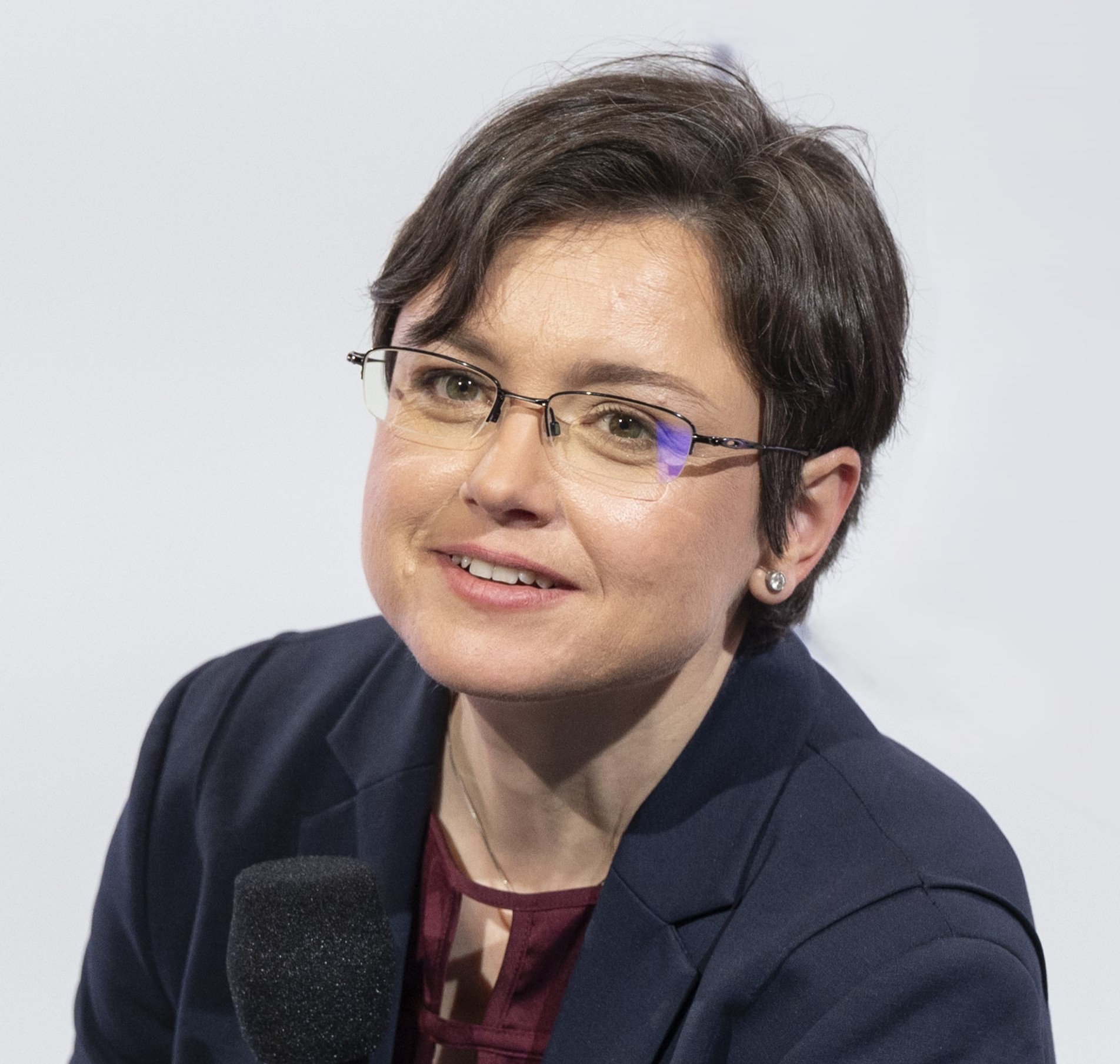
Estela Suarez
Jülich Supercomputing Centre and University of Bonn
Strategies for energy efficiency in HPC
Distributed Machine Learning: Bridging Cloud and Edge Systems
Edge-cloud solutions are being used to collect and analyze large amounts of data generated by IoT devices in various application domains, such as urban mobility, smart cities, healthcare, and augmented reality. We must be able to combine techniques and algorithms of data analysis and machine learning with the scalable architectures of Cloud systems and Edge technologies. This approach can reduce latency and network congestion associated with traditional cloud-based machine learning techniques by processing data locally on edge devices before sending it to the cloud for further analysis. This keynote discusses distributed machine learning and proposes a reference architecture to adapt distributed machine learning algorithms at the edge-cloud continuum. Real applications are presented, and the main open research issues are discussed.

Speaker: Domenico Talia is a full professor of computer engineering at the University of Calabria, Italy and an Honorary professor at Noida University, India. He is a co-founder of the start-up DtoK Lab. His research interests include Big Data analysis, high-performance computing, parallel and distributed data mining algorithms, Cloud computing, distributed machine learning, social data analysis, peer- to-peer systems, and parallel programming models and languages. Domenico Talia has published 10 books and more than 400 papers in archival journals such as Communications of the ACM, IEEE TPDS, IEEE Computer, IEEE TKDE, IEEE TSE, IEEE TSMC-A, IEEE TSMC-B, IEEE Micro, ACM Computing Surveys, FGCS, Parallel Computing, IEEE Internet Computing, and highly reputed conference proceedings. He is a member of the editorial boards of IEEE Transactions on Parallel and Distributed Systems, IEEE Computer, ACM Computing Surveys, the Future Generation Computer Systems journal, the International Journal of Web and Grid Services, the Journal of Cloud Computing-Advances, Systems and Applications, the Scalable Computing Practice and Experience journal, the International Journal of Next-Generation Computing. He was guest editor of special issues of IEEE Transactions on Software Engineering, Parallel Computing, IEEE Transactions on Big Data, and Future Generation Computer Systems, and served as a program chair or program committee member of several international conferences. Talia is a senior member of the Association for Computing Machinery (ACM) and IEEE Computer Society and has been a reviewer for several research agencies and public administrations.
Tasks Based Hybrid Workflows for Emergent Technologies
The Barcelona Supercomputing Center hosts a twin installation based on transmon qubits, superconducting technology funded by Spain. Another annealing system co-funded by EuroHPC JU and Spain is also expected. Significant research and development is done by BSC researchers from the Quantic groups in topics related to quantum computing, which are closer to its physics nature. Complementary to this research, and in collaboration with our colleagues, the Workflows and Distributed Computing group is doing research activities related to software aspects related to the integration of HPC + Quantum Computing (QC).
The talk will describe the steps taken towards integration of HPC and QC at the BSC. We will describe how a traditional workflow environment is being extended to support hybrid HPC+quantum computing workflows.The current solution enables the hybrid execution of workflows in CPUS, GPUs and Quantum systems (onsite and through cloud access). The talk will present these topics and our plans for the near future.
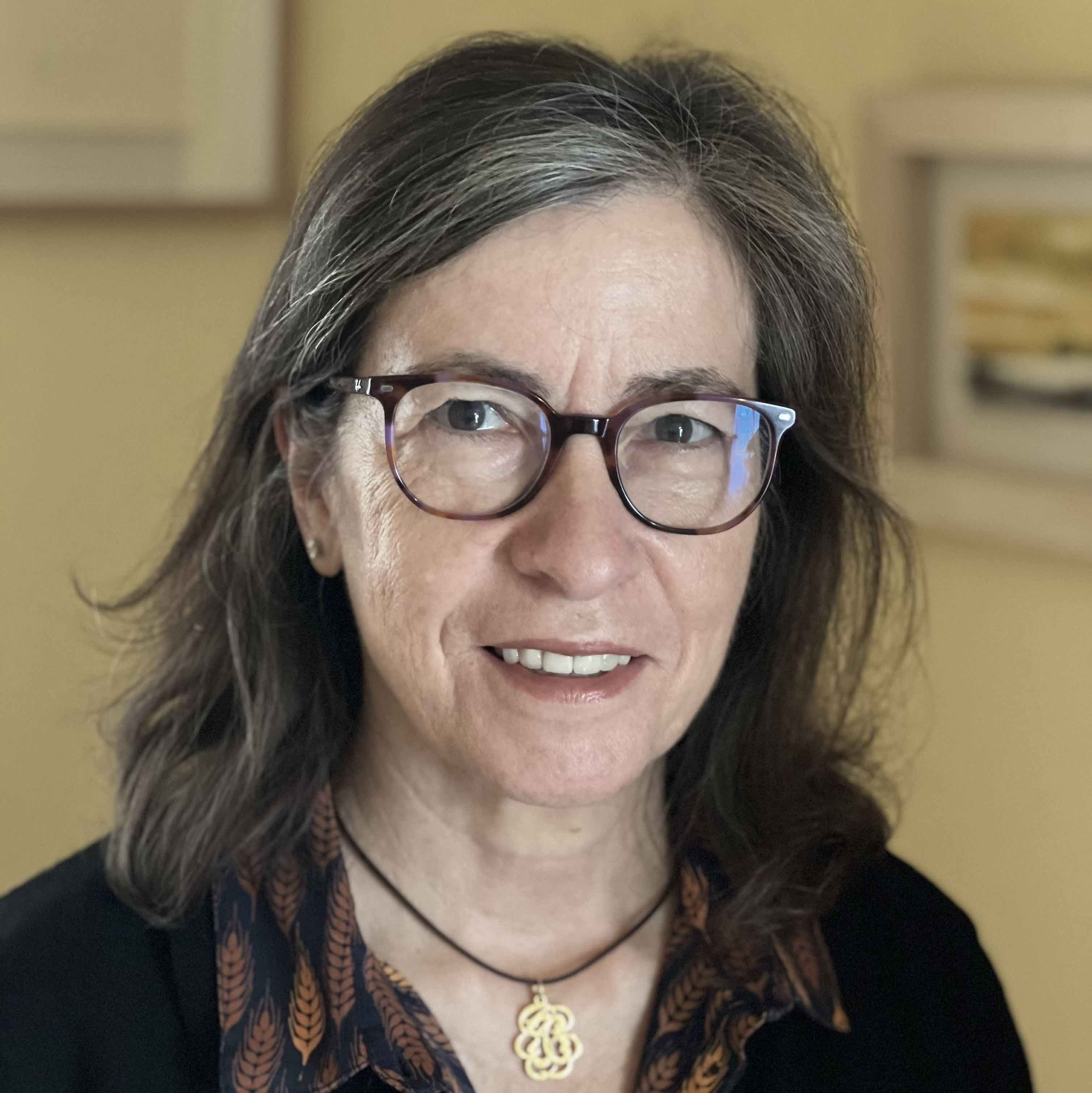
Speaker: Rosa M. Badia holds a PhD in Computer Science (1994) from the Technical University of Catalonia (UPC). She is the director of the HPC software research area and the manager of the Workflows and Distributed Computing research group, both roles at the Barcelona Supercomputing Center (BSC, Spain). Her research has contributed to parallel programming models for multicore and distributed computing. Recent contributions have focused on the digital continuum, proposing new programming environments and software for edge-to-cloud, as well as for the support of hybrid quantum-classic workflows. The research is integrated in PyCOMPSs/COMPSs, a parallel task-based programming distributed computing framework, and its application to developing large heterogeneous workflows that combine HPC, Big Data, and Machine Learning. The group is also doing research around the dislib, a parallel machine learning library parallelized with PyCOMPSs. Dr Badia has published more than 200 papers on her research topics in international conferences and journals. She has been very active in projects funded by the European Commission and in contracts with industry. She was the PI of the EuroHPC project eFlows4HPC. She is a member of the EuroHPC JU RIAG and a member of the HiPEAC Network of Excellence. She received the Euro-Par Achievement Award 2019, the DonaTIC award, category Academia/Researcher in 2019 and the HPDC Achievement Award 2021. Since 2023 she is a member of the Institut d'Estudis Catalans (Catalan academy). She is the chair of the ACM Europe Council.
Strategies for energy efficiency in HPC
Energy efficiency needs to be addressed in HPC at all layers of the stack, from application development up to hardware deployment and system operation. While significant gains have been achieved through advances in hardware architecture, improving how existing systems are operated remains an equally important opportunity. This presentation offers a broad overview of established approaches to improving energy efficiency, including hardware innovations, system software techniques, and application settings. It will then focus on operational practices aiming at obtaining the maximum throughput out of existing infrastructures, at the minimum possible energy cost. In particular, it discusses how runtime decisions based on system state and workload characteristics can be leveraged to reduce energy waste while maintaining performance. The presentation draws on work carried out in the SEANERGYS project, which develops a software suite combining monitoring, data analytics, and scheduling to achieve better energy-aware system operations.
Speaker: Estela Suarez is Joint Lead of the department Novel System Architecture Design at the Jülich Supercomputing Centre, and Associate Professor for High Performance Computing at the University of Bonn. Her expertise is in HPC system architecture and codesign. As leader of the DEEP project series, she has driven the development of the Modular Supercomputing Architecture, including the implementation and validation of hardware, software and applications. In addition, she leads the energy efficiency project SEANERGYS and has led the codesign efforts within the European Processor Initiative in 2018-2024. From 2024 to 2025 she has been Senior Principal Solution Architect at SiPEARL, during a sabbatical. She holds a Master's degree in Astrophysics from the University Complutense of Madrid (Spain) and a PhD in Physics from the University of Geneva (Switzerland).
Towards Real-time AI at the Edge
Edge AI applications including Agentic AI systems require real-time performance. In addition, in many applications, energy efficiency becomes a critical metric. To meet these requirements, recently many edge platforms have been proposed including GPUs, FPGAs, NPUs and heterogeneous architectures such as AI PCs. These devices are being used along with multi-core and novel memory technologies to realize advanced platforms to accelerate edge inference and support diverse applications requiring low latency. We will review emerging technologies for edge inference and advances in reconfigurable computing over the past three decades leading up to current innovations in FPGA accelerators for AI. We will illustrate parallel architectures and algorithms for commercial, defense and space applications. Using our algorithm-architecture co-design methodology to realize high performance accelerators for these applications, we demonstrate the role of modeling and algorithmic optimizations to develop highly efficient Intellectual Property (IP) cores for FPGAs and realize end to end application acceleration. We illustrate our methodology by developing high performance designs for graph machine learning, long context LLM inference, Mixture of Agents inference and SAR ATR. We conclude by identifying opportunities and challenges in exploiting emerging heterogeneous architectures composed of multi-core processors, FPGAs, integrated GPUs, NPUs and accelerators.

Speaker: Viktor K. Prasanna is Charles Lee Powell Chair in Engineering in the Ming Hsieh Department of Electrical and Computer Engineering and Professor of Computer Science at the University of Southern California. He is the director of the Center for Energy Informatics at USC and leads the FPGA (fpga.usc.edu) and Data Science Labs (dslab.usc.edu). His research interests include parallel and distributed computing, accelerator design, reconfigurable architectures and algorithms and high performance computing. He served as the Editor-in-Chief of the Journal of Parallel and Distributed Computing during 2012-‘24. Prasanna was the founding Chair of the IEEE Computer Society Technical Committee on Parallel Processing. He is the Steering Chair of the IEEE International Parallel and Distributed Processing Symposium. He is a Fellow of the IEEE, the ACM and the American Association for Advancement of Science (AAAS). He is a recipient of 2009 Outstanding Engineering Alumnus Award from the Pennsylvania State University and a 2019 Distinguished Alumnus Award from the Indian Institute of Science. He received the 2015 W. Wallace McDowell award from the IEEE Computer Society for his contributions to reconfigurable computing. He is an elected member of Academia Europaea.